Sterling silver (marked “STERLING” or "925") has real value based on weight and the live silver spot price; silver plate (marked "EP"/"EPNS") has little melt value. Maker, pattern, and completeness can add collector value. Have flatware and tea sets assessed before scrapping—Paradigm Experts offers free evaluations.
Maybe it came from your grandmother's china cabinet. Maybe you found a heavy, tarnished tea set while clearing out an estate in Burke or Vienna. Either way, you're now holding a set of silver you don't use, and you're wondering the same two things almost everyone does: Is this real? And whatWhat is it actually worth?
Those are the right questions to ask, and the answers matter more than most people expect. The difference between genuine sterling silver and silver plate can be the difference between meaningful value and almost none at all. Here's how to tell what you have, how sterling flatware and tea sets are valued, and why it pays to have your pieces looked at before you sell or scrap them.
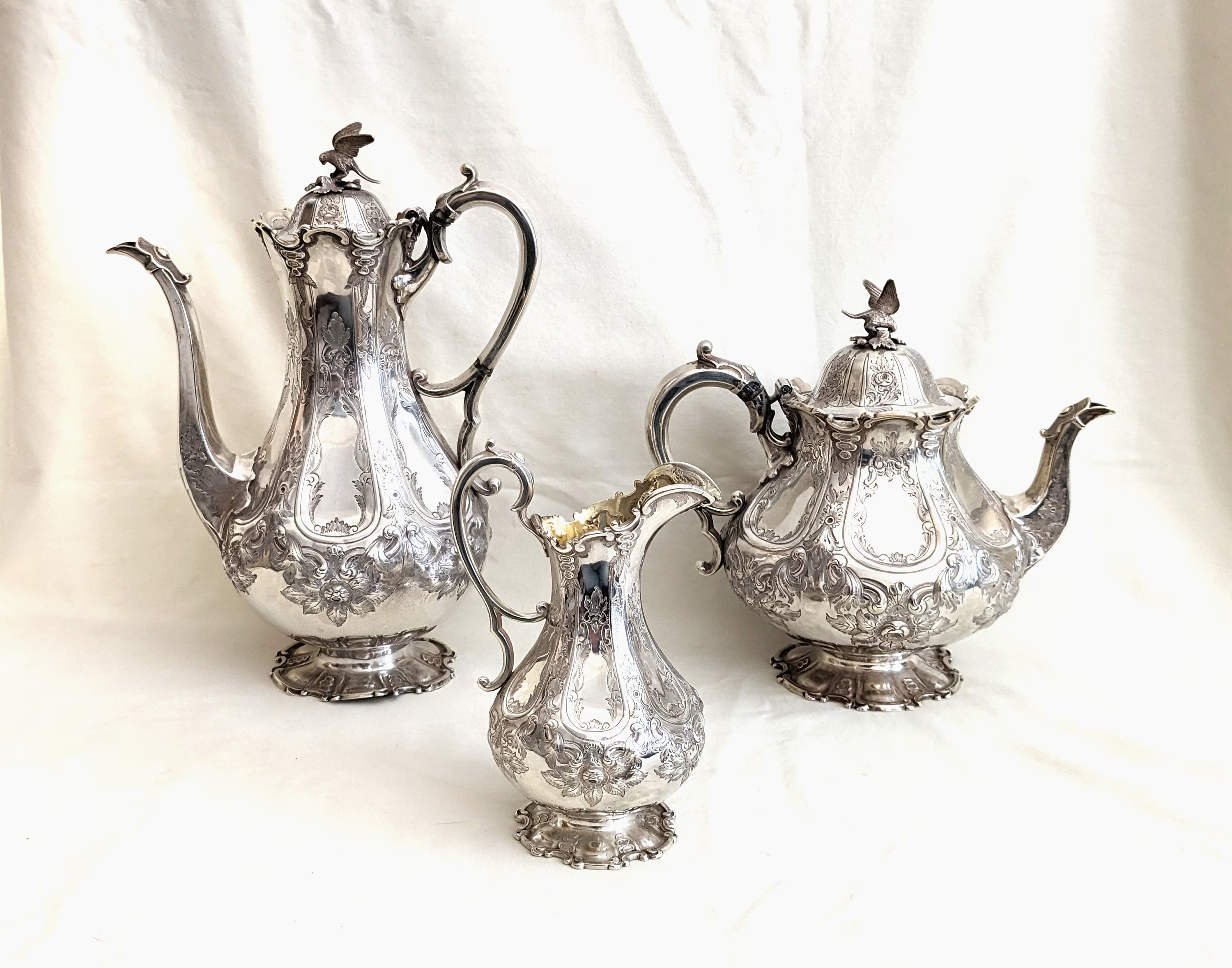
Before anything else, you need to know whether your pieces are solid sterling silver or silver-plated. This single distinction drives almost everything about value.
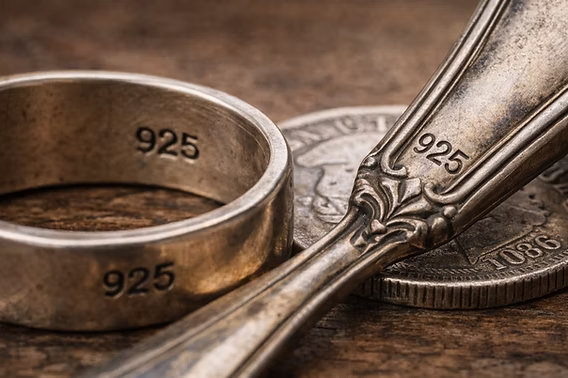
Sterling silver is an alloy that is 92.5% pure silver. Because of that composition, genuine sterling is almost always marked. Look on the backs of flatware handles, the undersides of trays, and the bases of teapots and creamers for one of these marks:
Older English pieces may instead carry a series of small stamped hallmarks (a lion, a crown, letters, and symbols) rather than the word "sterling." These hallmark systems are their own language, and they can indicate age, city of origin, and maker.
Silver plate, by contrast, is a thin layer of silver bonded over a base metal like brass or nickel. It is often marked with terms such as "EP," "EPNS" (electroplated nickel silver), "silveron copper," "A1," or a brand name like Rogers with no purity number. Plate can look nearly identical to sterling once polished, which is exactly why so many people misjudge what they own.
Here's the part that surprises people: silver plate contains only a whisper-thin coating of actual silver over a base-metal core. There simply isn't enough recoverable silver to give it meaningful melt value. A large, ornate plated tea set can feel impressively heavy and still be worth very little as metal. Its value, if any, is decorative or based on brand and condition, not silver content.
Sterling is the opposite. It is solid precious metal all the way through, which is what gives it real, weight-based worth.
Once pieces are confirmed as sterling, valuation generally comes down to two layers.
The foundation of any sterling piece's value is its actual silver content, calculated from its weight and the current silver spot price (the live global market price for silver, which changes throughout each trading day). Heavier sterling pieces contain more silver and are therefore worth more at the melt level.
An important caveat on tea sets: many tea and coffee sets are sterling on the body but have weighted or reinforced bases filled with a non-silver material for stability. Knifehandles are frequently weighted, too, with a steel blade attached. A professional evaluation accounts for this so you aren't quoted on material that isn't silver.
Melt is the floor, not always the ceiling. Certain sterling pieces carry additional value above their metal weight because of what they are:
Because these factors pull in different directions, two sterling sets of identical weight can be worth different amounts. That's precisely why a knowledgeable, in-person look matters.
It's tempting to lump old silver in with a general scrap-metal run or a quick online offer. The risk is real: you could scrap a collectible pattern for melt or sell a plated set thinking it was sterling and be disappointed. A proper evaluation identifies your marks, separates sterling from plate, weighs and tests the genuine silver, and flags any collector value before you make a decision. Then the choice is yours, made with facts in hand. If you're clearing out a household or estate, we also buy gold jewelry and estate jewelry, so you can have everything reviewed together.
Check the backs and undersides for "STERLING," "925," or a series of small stamped hallmarks. Marks like "EP," "EPNS," or a brand name with no purity number usually indicate silver plate. When you're unsure, a professional test confirms it precisely and non-destructively.
Its melt value is minimal because it contains only a thin silver coating over base metal. Any value is generally decorative or brand-based rather than from silver content. It's still worth having looked at so you know for certain.
It starts with the weight of genuine sterling multiplied against the current silver spot price, adjusted for any weighted or non-silver components. Maker, completeness, and condition can add collector value on top of melt.
No. Tarnish doesn't affect the underlying silver content, and over-polishing can sometimes harm collectible surfaces. Bring your pieces as-is.
Before you sell or scrap a single piece, let our team tell you exactly what you have. At Paradigm Experts, we evaluate sterling flatware, tea sets, and estate silver transparently and with no pressure. Bring the full set if you can, including any trays, serving pieces, and original boxes, so we can assess completeness.
Paradigm Experts—6310-A Springfield Plaza, Springfield, VA 22150—(703) 650-5034
We proudly serve sellers across Springfield, Burke, Fairfax, Lorton, Oakton, Vienna, Tysons, McLean, Falls Church, Arlington, Alexandria, Woodbridge, Centreville, and the greater DC metro. Stop by for your free, no-obligation evaluation and get honest answers about your silver.